Hiedanranta shows the way for urban development
23.03.2026 •
Business cooperation
Ecosystem work
Tampere is growing strongly. The City wanted to design a new city district for nearly 20,000 residents to a former factory area and its surroundings in Hiedanranta. The area under construction is located by the Näsijärvi lakeside about four kilometres northwest of the centre of Tampere.
The City of Tampere decided to take advantage of low-carbon, energy-efficient and smart solutions to make the area carbon-neutral in line with the city strategy.
– “Based on this, the vision of the development programme has been formulated to meet future needs. The objectives have been specified in phases so that we can make concrete progress towards the vision that has been set,” says Juha Kaivonen, Development Director at the City of Tampere.
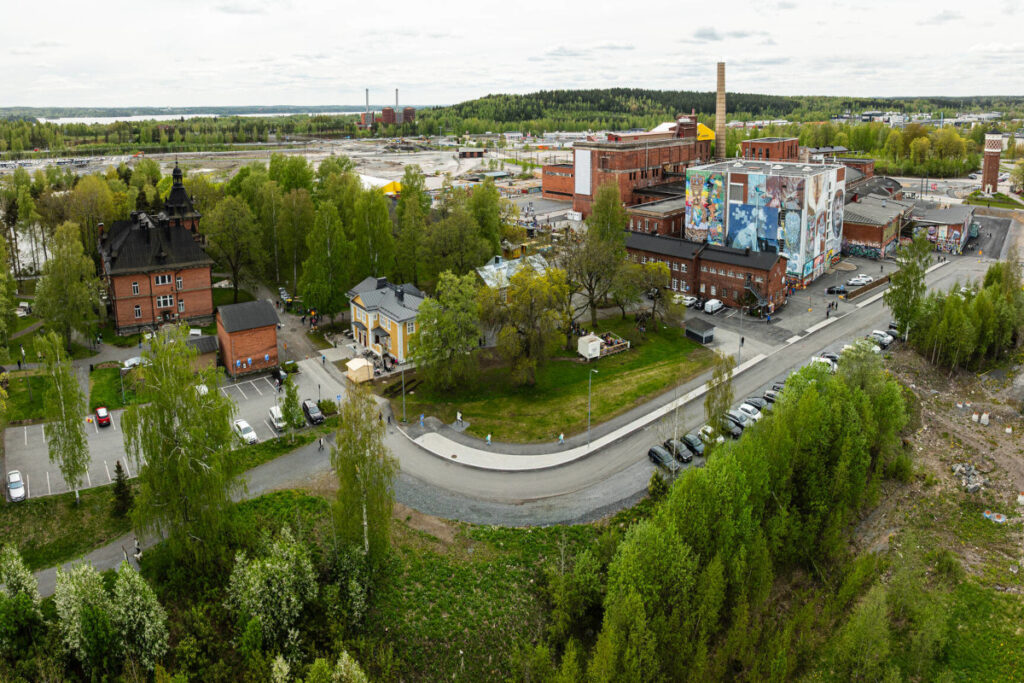
The City of Tampere will implement the new city district in a different way from usual as it established Hiedanrannan Kehitys Oy, a development company that is responsible for the construction and selling of the plots in the area.
The company develops the areas owned by it in accordance with the development programme and the master plan for Hiedanranta and the principles of the housing policy of the City of Tampere.
“We do not aim to only sell the plots, but also to ensure that the plots will be built with a lower burden on climate,” says Mikko Leinonen, CEO of Hiedanrannan Kehitys Oy.
The company will build the urban technology and public areas in its area and transfer them to the city as compensation for the land use agreement. The development company operates genuinely in the market, so it is able to implement the objectives in a novel way.
“We are answerable to our owner, the City, for making our business profitable. For example, we have priced the plots we are selling and the premises we rent out at market prices, which we ensure through competitive tendering and external evaluations,” says Leinonen.
Hiedanranta is part of the City of Tampere’s ecosystem agreement, in which the City and the state have agreed on the allocation of research, development and innovation funding. The area will be developed into an innovation hub for sustainable built urban environments. “One example of this is that we have started working together with various actors in the construction sector to find solutions that will enable us to significantly reduce the carbon footprint caused especially by the construction of this area in the entire city district,” says Leinonen.
In Hiedanranta, sustainable development is visible, for example, in the terms and conditions of construction set for the developers of the multistorey apartment buildings. In addition to the requirements that guide to reducing the carbon footprint of construction, the terms and conditions also take into account the construction of affordable housing and different types of housing as well as the adaptability of the apartments.
The developers of Hiedanranta must commit to more environmentally friendly construction than usual. In practice, it means lower energy consumption and air infiltration in residential buildings, the use of low-carbon concrete, a long service life of the structures and plumbing fixtures that save water. A building-specific environmental certificate must also be applied for each residential building.
“Instead of theoretical examinations and individual pilot projects, Hiedanrannnan Kehitys Oy has started to directly use the best technology available in the market. In other words, as a result of collaboration, we take advantage of the results of research, development and innovation work carried out in the sector, maximising their impact on the carbon footprint of the entire city district. Hiedanrannnan Kehitys Oy has the role of a facilitator in this,” says Mikko Leinonen.
There is continuous cooperation and interaction between the different parties.
“The solutions that are currently used in the ongoing construction projects are based on the best expertise available at the moment, but in five years’ time, we will be able to put into practice solutions that are being developed in someone’s research laboratory today. The essential thing is that we do not just wait until the requirements in legislation become stricter or promote stricter requirements, but start using new methods on our own initiative as soon as they are available,” says Leinonen.
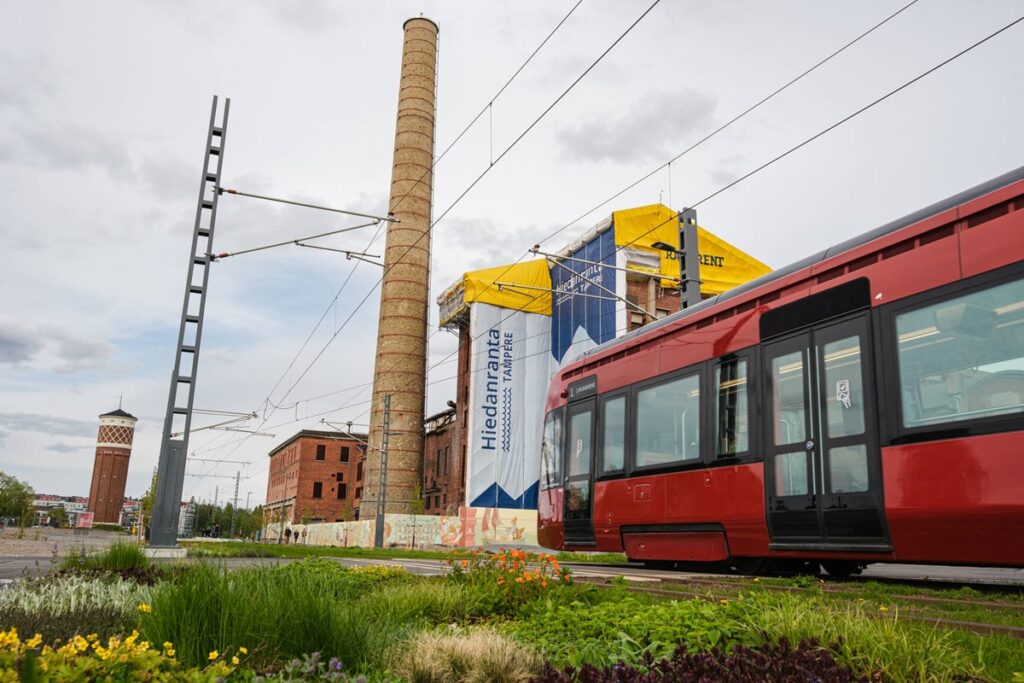
Tampereen Energia, Hiedanranta’s partner in the energy sector, will construct a SmartNRG heating network in the area, making entirely carbon-neutral energy possible for the city district. The heat circulating in the low-temperature network originates from the data rooms in the Tampere region, among other things. The origin is verified with guarantees of origin from the Energy Authority. Joining the district heating network of the city district reduces the carbon dioxide emissions of a building by up to 10,200 kg/100 MWh.
“The low-temperature network of the Hiedanranta city district is one of the first ones in Finland and the largest one in the region. The properties owned by Hiedanrannan Kehitys Oy were the first to change over to using carbon-neutral SmartNRG energy with guarantees of origin in the regional low-temperature network in June 2025. The first residential buildings in the city district will be connected to the low-temperature network next year,” says Leinonen.
The construction of Hiedanranta will first begin from the northern side of the area, i.e. the local detailed plan area of the North Blocks.
The road bases in the North Blocks have been made using recovered materials and recycled asphalt. The material used in the structural layers of the streets was mainly crushed concrete that was available in Hiedanranta as well as rough boiler slag from waste incineration, transported from nearby waste centre of Tarastenjärvi.
In the construction of the road bases in the North Blocks of Hiedanranta, a total reduction of 23 per cent in carbon dioxide emissions was achieved by using recovered materials and recycled asphalt in the street structures.
In addition, Hiedanrannan Kehitys Oy required that renewable fuels had to be used in the machinery and transport equipment on the construction site. Carbon dioxide emissions from the machinery and transports used in the contract decreased by more than 60 per cent compared to the situation in which non-renewable diesel would have been used.
Hiedanranta was awarded the BREEAM Communities certificate in April 2025 with the grade “Outstanding”, which is the highest possible rating. This grade has previously been awarded to only five areas in the world.
The area certification indicates sustainable urban development and verifies the responsibility of the planning and implementation of the new city district. Future residents will experience the environmental certification through climate‑friendly residential buildings, yards, and park areas.
Hiedanranta’s area certification is the first certificate granted to a city district in Finland. “Hiedanranta is one of the attractions of Tampere and also showcases expertise, the development of which is monitored widely,” says Juha Kaivonen.
Urban development sites are important places for developing innovation ecosystems. They provide an opportunity to experiment with new solutions, develop business and build a sustainable city. Urban development sites are mentioned in every ecosystem agreement.
Tampere – InnoCities
The most fascinating city district in Tampere — The centre for western Tampere
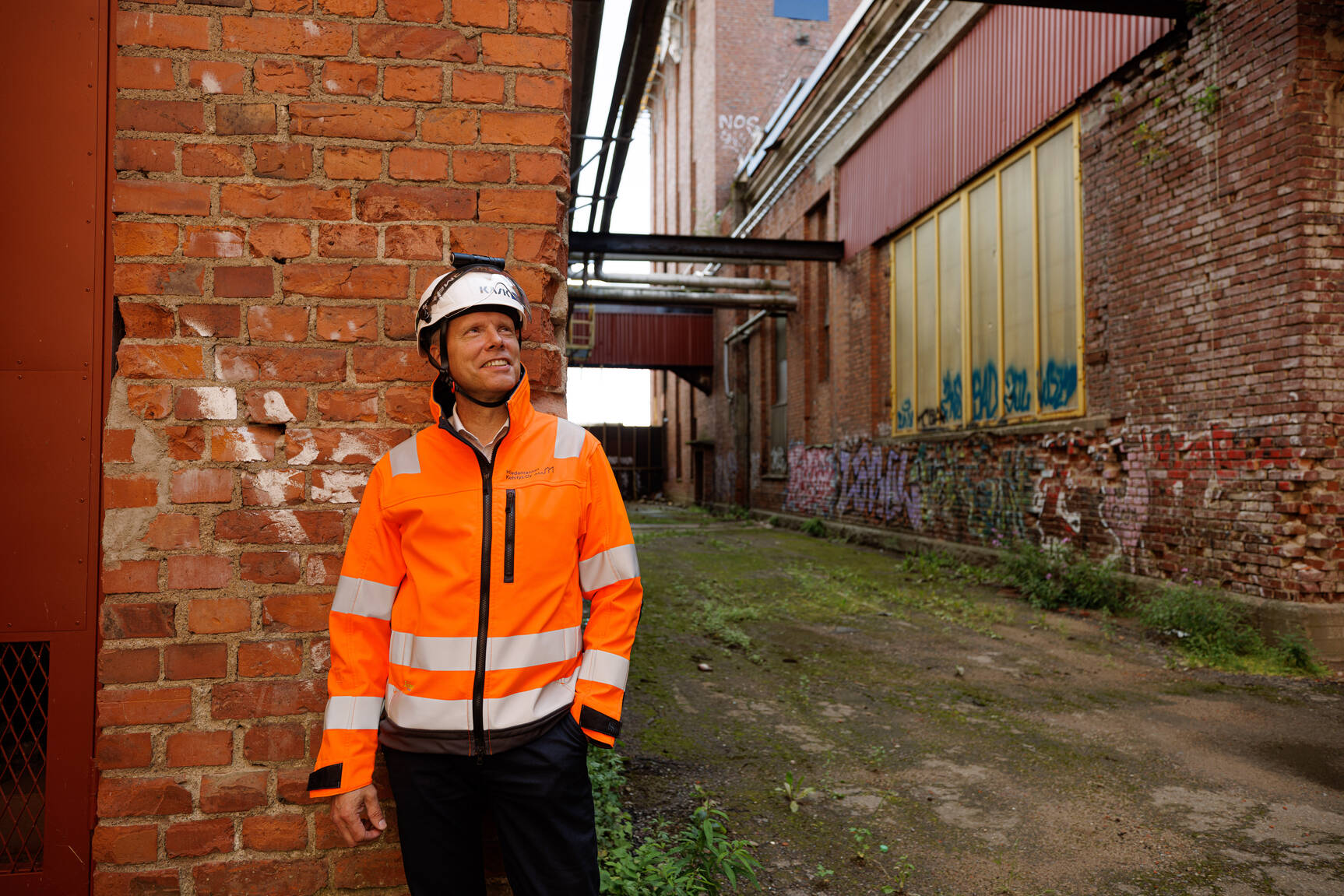
Primary photo: In the photo: Mikko Leinonen, CEO of Hiedanrannan Kehitys Oy
Photo: Hiedanrannan Kehitys Oy/Tuomas Jussila.