Three observations on Estonia’s drivers of change and its approach to supporting business growth
The annual learning trip organised by InnoCities coordination was held in Estonia in 2026. A culture that encourages bold, rapid experimentation has turned Estonia, with its 1.3 million inhabitants, into one of the EU’s most business-friendly countries. One in ten Estonians owns at least a micro-enterprise. There are more than 1,500 start-up companies in Estonia.
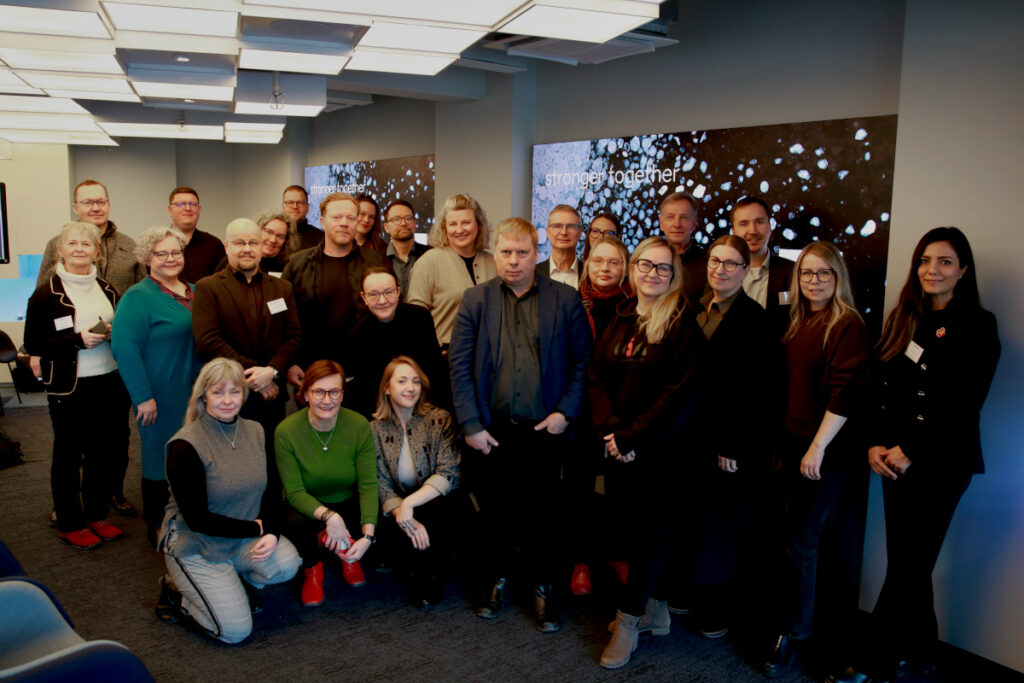
The aim of the trip was to explore how Estonia leverages technology, policy, and partnerships to boost competitiveness, for example by helping startups and scale-ups expand internationally. At the same time, the group sought to identify practical methods to develop the innovation ecosystems of the InnoCities and to support their internationalization.
A group of 31 ecosystem developers took part in the trip from 3–5 February 2026.
From adversity to success and from underdog to challenger
Estonia has had fewer resources available than Finland, but this small country has turned the situation to its advantage and made its small size a superpower. A focus on the capital, low hierarchy, and minimal bureaucracy have enabled Estonia to harness its expertise into a transformative force greater than its size.
In the 1990s, Estonians started developing their own technical solutions because they did not want to pay international companies for existing technologies. This collaboration gave rise to the E-Estonia initiative, through which public services were digitised rapidly and extensively. For example, they decided to turn libraries into E-points, where older people and others receive guidance for handling their affairs online. Although Estonia has also learned from Finland, Finland considered a similar practice too risky. Precision and a focus on safety are both strengths and weaknesses for Finland.
Collaboration without boundaries, driven by need
In Estonia, it’s common for public sector professionals to be former or current entrepreneurs themselves. They then share the same perspective. When the public sector shapes the operating conditions for start-ups, authorities and decision-makers draw on their own experience of the sector’s needs and requirements.
Companies receive seamless support throughout their development journey with a refined package of services. Traditional silos do not become barriers to collaborative innovation. For example, the Tehnopol science and business park was originally founded by the ministry, the City of Tallinn, and TalTech University. It supports start-ups and SMEs as they grow.
Tehnopol provides startups with a comprehensive development environment that brings together mentoring, business development, technical support, funding opportunities, physical facilities, and a broad expert network. The services are designed to help teams progress rapidly from idea to market, and then on to international growth. To participate in the startup accelerator, the company pays with a 2% equity stake. This ensures Tehnopol is invested in the companies’ growth.
TalTech University of Technology, Tehnopol and Swedbank have set up the Prototron funding fund to close the gap between research and commercialisation. Prototron helps research teams and startups turn their ideas into testable prototypes. Ideas validated in Prototron can move on to Tehnopol’s services for further growth.
State infrastructure also extends naturally across borders. For example, X-Road is a platform that allows different systems and organisations to exchange information securely across Europe’s internal borders. Estonia has worked to protect its critical digital services and data through European cooperation. The Data Embassy in Luxembourg allows key infrastructure to function from elsewhere in Europe, even during crises.
Flexibility encourages experimentation and growth
Estonia’s public sector and its flexible regulatory environment encourage companies to experiment, invest, and grow.
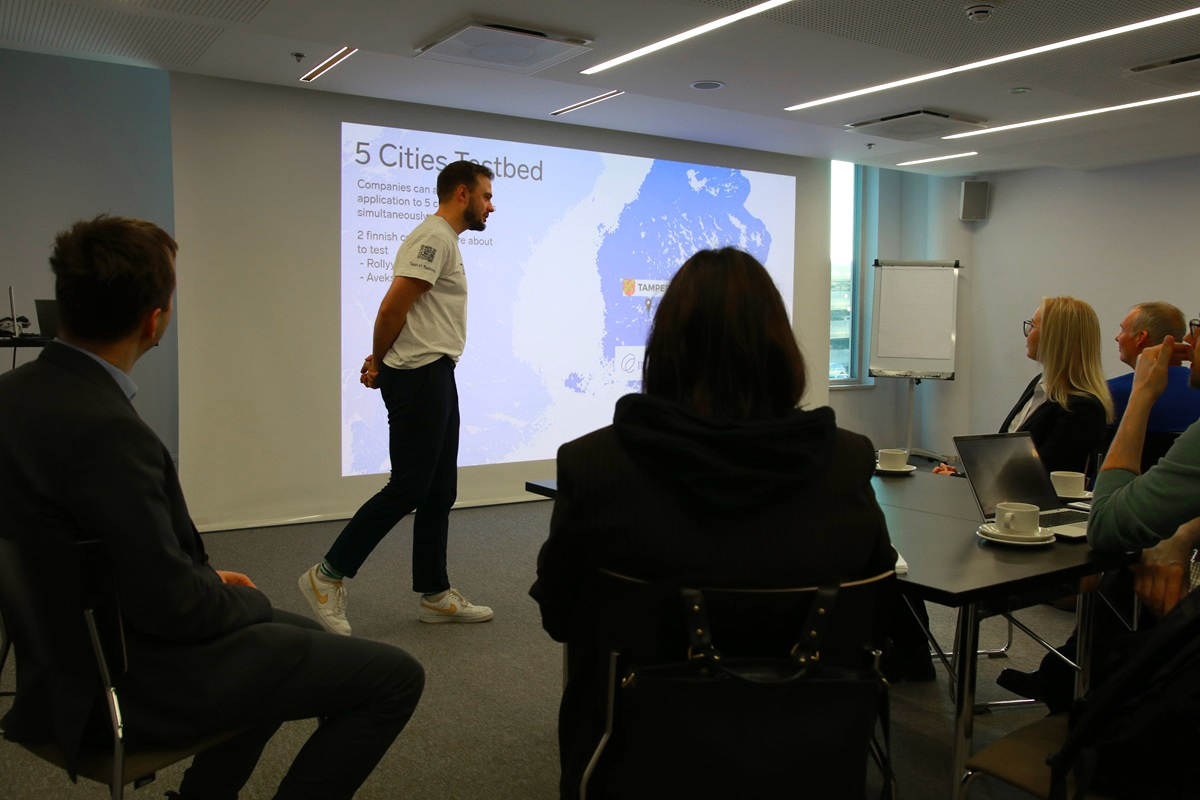
For example, the city of Tallinn offers companies opportunities to pilot their solutions through the Test in Tallinn programme, using the city itself as a testbed for new innovations—especially in mobility, energy efficiency and renewable energy. The aim is to gain experience and develop products for global success.
Estonia offers strong tax incentives for corporate investment. The core principle of Estonian corporate taxation is that companies are taxed only when they distribute profits, not when they generate them.
E-Residency is one way to attract new entrepreneurs and ideas. E-Residency allows you to establish a company quickly and easily, and accelerates handling administrative matters in the early stages. In addition to entrepreneurial Estonians, E-Residency has attracted new entrepreneurs, especially from Ukraine, Germany and Spain, which are among the leading countries in the programme. We will see how the regulatory environment aligns with initiatives such as the EU INC, which aims to let you establish a company within 48 hours through a single portal and operate in all EU countries under unified rules.
In summary, Estonians are willing to boldly experiment with new approaches and make rapid changes of direction with agility. Finland has much to learn from its southern neighbour when it comes to cooperation and a proactive approach to getting things done.