The Kera district is built upon sustainable foundations
22.10.2026 •
Business cooperation
Ecosystem work
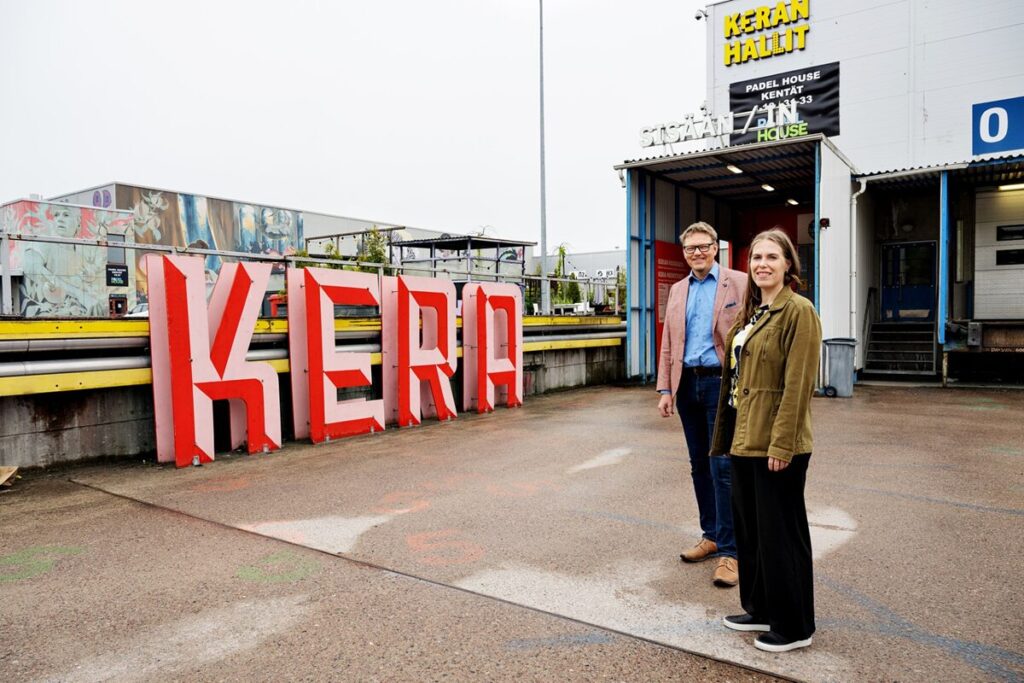
A new city district for 16,000 residents is rising in Kera, Espoo. The new residential area, replacing an old industrial and logistics area, is being built on a plot of land that is already ready for construction. It increases sustainability that no trees need to be felled to make way for new construction.
“Kera wants to be an internationally known example of a circular economy and a testing platform where solutions supporting carbon-neutral circular economy are tested and developed,” says Mika Rantala, Project Manager from the City of Espoo.
Espoo aims to achieve carbon neutrality by 2030. Espoo has set its carbon neutrality target at an 80% reduction in emissions from the 1990 baseline by 2030. Sustainable modes of transport are one of the most important ways of reducing emissions.
“Kera is only a 15-minute train ride away from the centres of Espoo and Helsinki. It only takes five minutes to Leppävaara by train and fifteen minutes by bike along the cycle path. If the light rail is also implemented in the future, Kera will become a major junction,” Rantala says.
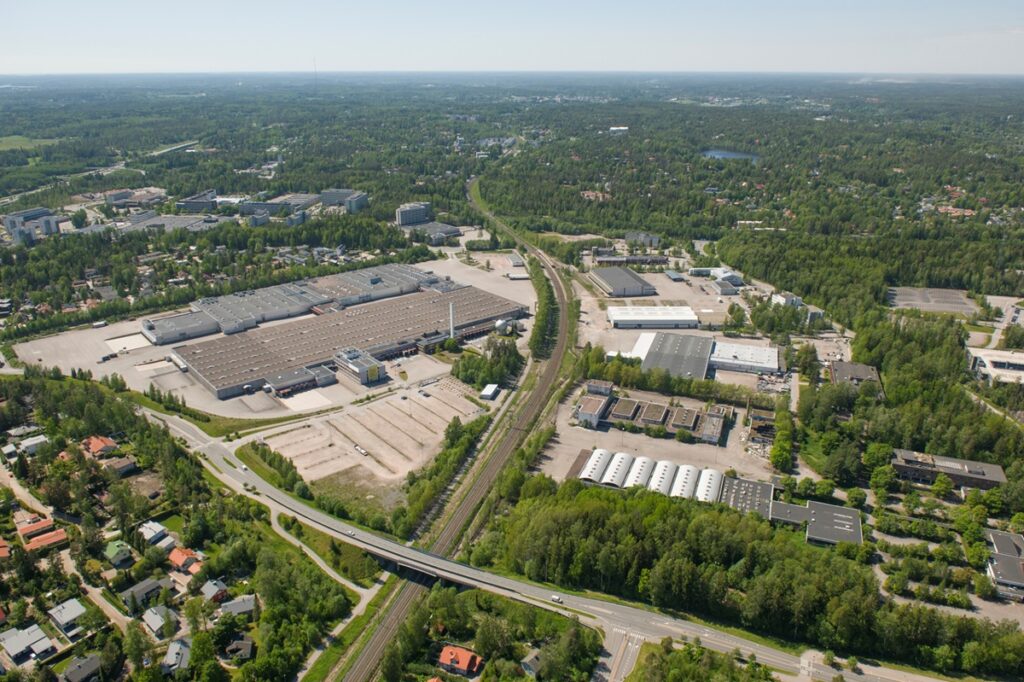
In Kera, land is mainly privately owned. Cooperation between the city and landowners plays a key role in accelerating sustainability. The City of Espoo and the landowners created a tool, the development commitment, enabling the new city district to be built in a sustainable and long-term manner.
The development commitment defines the common principles for developing the area, but the means of implementing them can be diverse.
“Each party launching a project in the area must draw up a plan indicating what kind of solutions they intend to employ to meet the objectives of the commitment in their own project. How will emissions be reduced? What kind of circular economy solutions will be implemented? Before applying for a building permit, the plan is sparred together with experts from different city units,” says Emmi Kauhanen, Development Manager from the City of Espoo.
“We have not wanted to set specific sustainability criteria for projects, as technological solutions are developing rapidly. Instead, we work together with the projects to find out what kind of innovative experiments could be carried out in them. The first projects have tested the reuse of bricks, for example,” Rantala continues.
The experiences from the development commitment have been positive. The City of Espoo and the Finnish Property Owners Rakli have also examined whether the commitment model would be suited for other cities as well.
“Cities face similar challenges in sustainable development issues. Complex phenomena also require new solutions for the dialogue between the private and public sectors. The development commitment is a good tool for this,” Kauhanen points out. The development commitment has also earned recognition for its innovativeness: the commitment was awarded with an honourable mention in the national Quality Innovation Award competition, and it won the Mayor of Espoo’s Innovation Competition.
The first of the eight apartment blocks built by Pohjola Rakennus have already been erected in the area. The materials used in construction include not only recycled materials but also low-carbon concrete products and reusable building components. Special attention is paid to the life cycle emissions of the building and materials, maintainability, renewability and post-life cycle usability.
The spacious construction site also allowed for testing the recycling of plastic sheeting. Separate collection is profitable when more than 21 kg of plastic is collected, and at Pohjola Rakennus’ site the calculated amount of plastic is over 1,000 kg.
Residents are encouraged to use sustainable modes of transport not only by rail transport and the cycle path but also by making the centre of Kera car-free.
“The southern side of the Kera area is largely a car-free residential area, with the parking facilities being placed in the area surrounding the city centre,” says Mika Rantala.
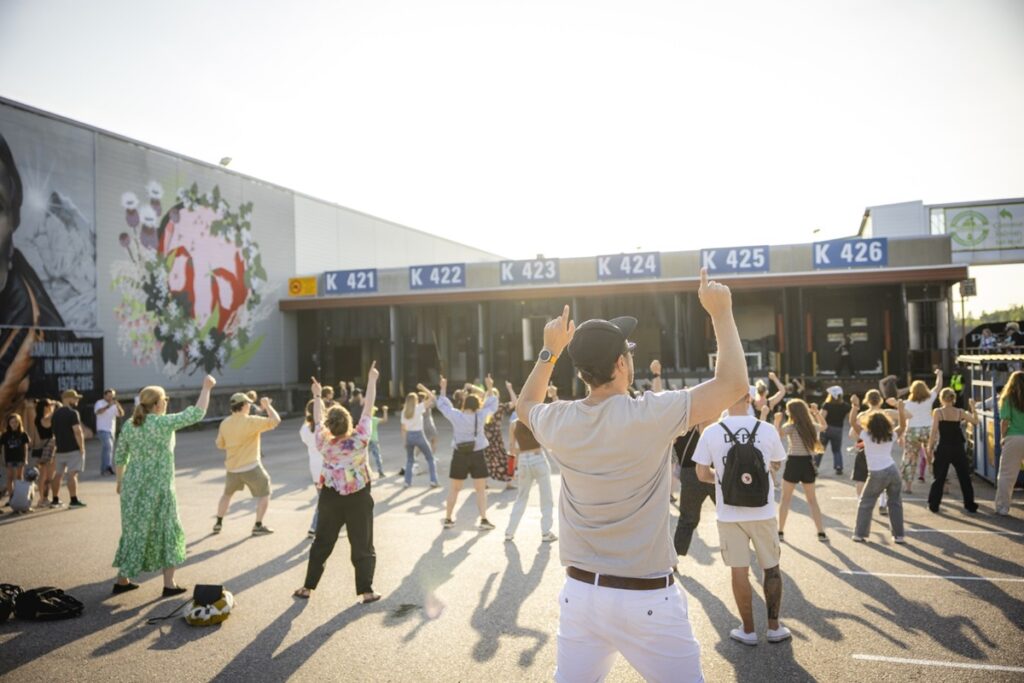
SOK opened its logistics hall for temporary use before the construction work began. The Keran Hallit concept provided premises for small entrepreneurs, artists and athletes, where they could carry out their own activities in a bold and creative manner.
The City of Espoo has acted as an enabler of many experiments in the area. Over the years, the experiments implemented at Kera have included projects from stormwater walls and mushroom cultivation up to urban robotics. Even as we write this, Kera is acting as one of the testing environments for the City of Espoo’s InnoCities project.
“The end use of the Kera facilities has laid foundations for the communality of the new city district and its brand. I hope that similar utilisation of empty spaces for purposes such as sports, culture and production will spread as the legacy of Kera and become a part of urban development to a larger extent,” says Emmi Kauhanen.
Property owners also benefited from the temporary use of the facilities.
“Property owners are often cautious about participating in this kind of projects, so it is great that SOK dared to do so. They admitted that although the project caused extra work, the operations were profitable,” Rantala says.
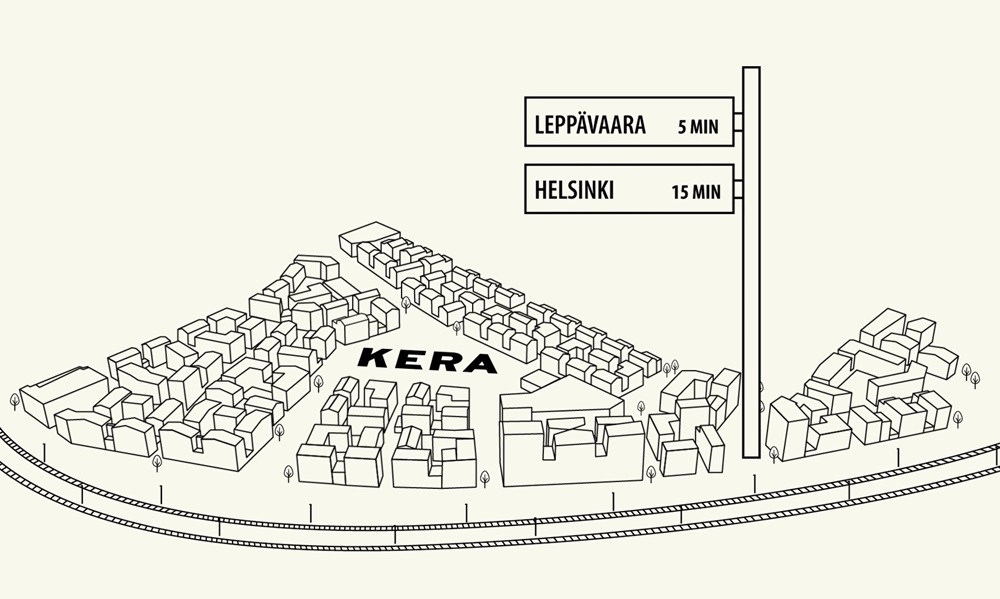
Uusikera.fi (In Finnish)
Main photo: Kristoffer Åberg
Urban development sites are important places for developing innovation ecosystems. They provide an opportunity to experiment with new solutions, develop business and build a sustainable city. Urban development sites are mentioned in every ecosystem agreement.
In this article series, we have previously presented these urban development projects: Hiedanranta and Hippos.