Solutions for utilizing waste heat from data centers sought in Kajaani
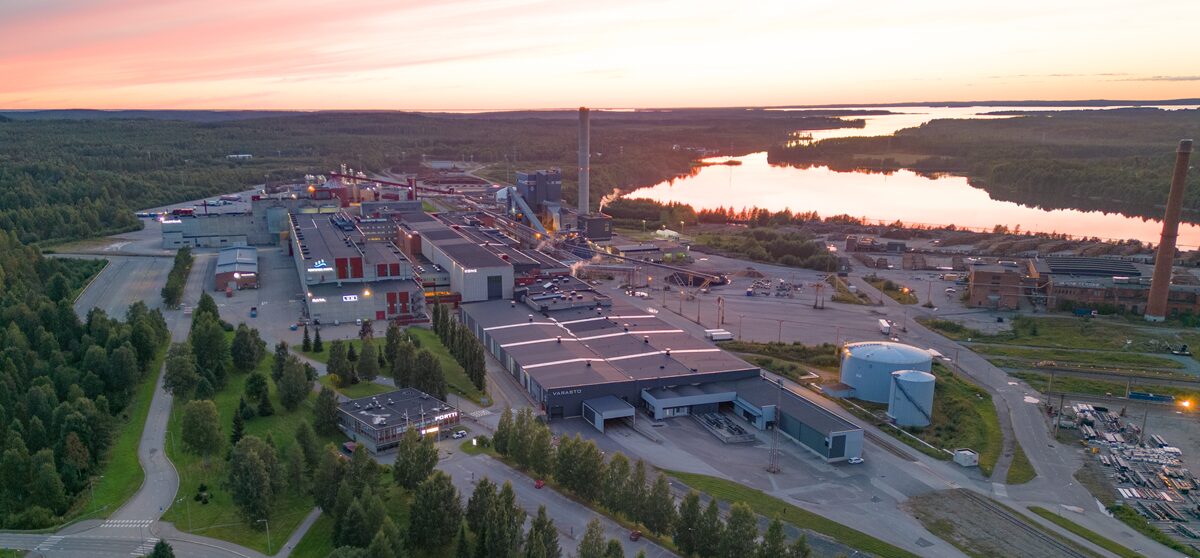
One of the biggest challenges that data centers face is the question: what to do with the huge amount of excess heat? Kajaani is developing a practical solution to this issue. The city is also creating a business model that could be implemented in data center ecosystems all across Europe.
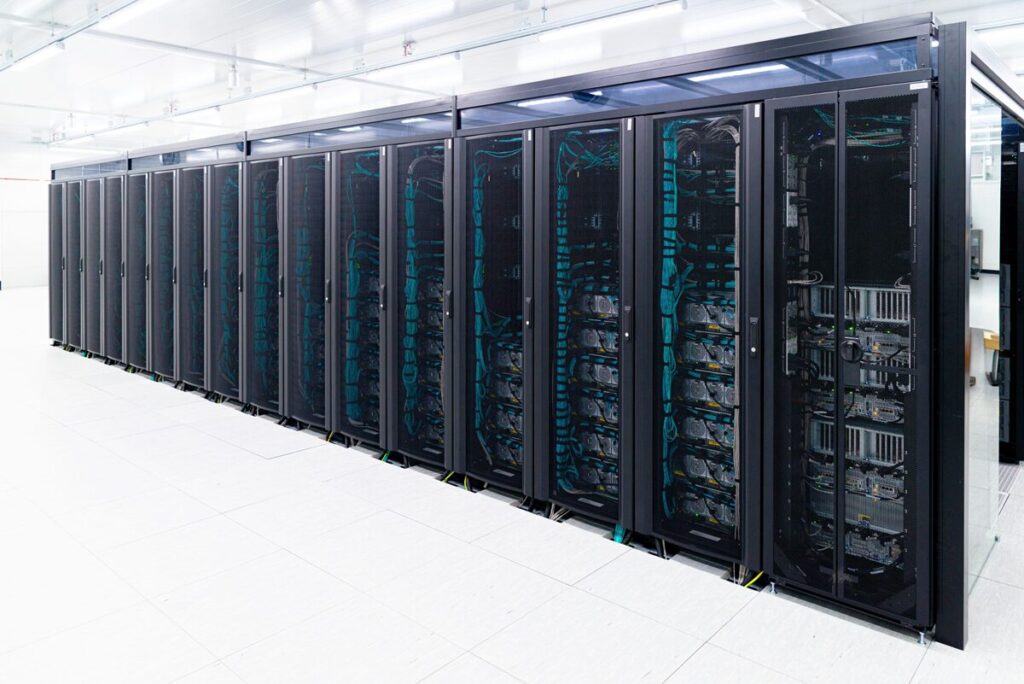
Nordic countries have quickly become a place of interest for data center operators as a potential location. Kajaani stands on exceptionally strong ground here: several different data centers are already operating in the area, such as the EuroHPC LUMI supercomputer and the national supercomputer Roihu which was recently introduced into use. In addition, the new EuroHPC LUMI AI supercomputer is also currently being built in the Rannantie industrial area in Kajaani.
‘There was a time when LUMI was the most powerful supercomputer in Europe – and it is still one of the world’s top supercomputers. It has created a unique data center complex around Kajaani,’ says Mikko Kerttula from CSC – IT Center for Science.
Several European countries are researching possible ways to utilize waste heat from data centers, but Kajaani holds a strong competitive edge through its mixture of different data centers, existing infrastructure, and the opportunity to test solutions on a genuine scale. Few locations can offer these kinds of opportunities.
Turning waste heat into electricity
In places, excess heat from data centers is already being utilized for district heating. As the number of data centers continues to rise, the centers may start generating many times more heat than can be used locally.
This is why the companies in the sector are focused on the development of a specific technological breakthrough: how to convert low-temperature excess heat into electricity. Solutions for utilizing excess heat in energy production do exist – when that heat comes at a higher temperature. However, a similar, functional model has yet to be realized in a data center environment.
‘At around 40 to 50 degrees, the temperature of waste heat from data centers is relatively low, and no one in the world has yet figured out how to turn it into electricity,’ says Project Manager Jouko Putkonen from Kajaani University of Applied Sciences.
If this conversion could be done in an economically viable manner, its effects would be significant: the converted energy could be transferred and used anywhere, unlike heat which is often tied to local needs. This solution would also help improve the social acceptance of data centers.
New business model
A business model is being developed alongside the technological solution to make the utilization of waste heat easier and economically viable. The heat generated in data centers is a free resource, but its further processing requires investors and operators.
‘We are building an ecosystem-based model in Kajaani in which companies, research bodies, and infrastructure owners come together as one cluster,’ Putkonen says.
The utilization of waste heat brings about new business opportunities and broadens the data center ecosystem. The project is aiming to create a concept that could be replicated in other cities.
Overall optimisation developed through a digital twin
Data centers are not isolated operators but they form a part of a broader energy and business network. In Kajaani, this network is being modelled with the help of a digital twin. The University of Oulu is using a digital twin to develop regional overall optimisation to help utilize waste heat, while CSC is utilizing the supercomputer’s digital twin to predict the amount of waste heat based on the computer’s computational load. Regional overall modelling makes it possible to optimise the energy flows in the entire region – including data centers, district heating, and other industry – as a single system. The result? More efficient energy use and better conditions for the introduction of new solutions.
From research towards pilots
Kajaani is building research competence specialising in data centers alongside the development work. The objective is to create a permanent research group in the CEMIS research and training center that could support both technological development and practical piloting.
‘Our goal is that Kajaani will develop and pilot new solutions that can be utilized more extensively also outside Finland. For example, we are already involved in international cooperation through CSC in the digital twin modelling of supercomputers,’ says Jouko Putkonen.
The work is currently focused on studying possible technological solutions, establishing corporate partnerships, and developing modelling. But a simple theoretical study is not the end goal – the concrete piloting in Kajaani is. The development work is being carried out in cooperation with the CEMIS research and training center as a part of a research and development project on the data center ecosystem in Kajaani (CEMIS-DCR project), in which the Kajaani University of Applied Sciences, CSC, the City of Kajaani, the University of Oulu, and various business operators are also involved.
More information:
Launch of the Kajaani Data Center Research Initiative (CEMIS-DCR) – CEMIS
Primary photo: Local operators include the state-owned CSC supercomputer center and international data center enterprises like Borealis Data Center. Large companies are preparing new investments in the area.
InnoCity Kajaani’s key development areas are measurement technology and measurements, as well as high-performance computing, artificial intelligence, and data centers.