31 doctoral students boost the development of intelligent heavy machinery
In 2024, the Ministry of Education and Culture allocated a total of EUR 255 million to universities with which to strengthen doctoral education. This allowed for 1,000 new starting places in different fields. One area of research that has received pilot funding is the development of intelligent heavy machinery.
Intelligent heavy machinery has become a key area of research as part of the ongoing electrification of industry. Five universities, Tampere, Oulu, LUT, Turku and Aalto, were granted 31 doctoral programme places in intelligent heavy machinery research last year. The pilot titled the Intelligent Work Machines Doctoral Program is currently underway. The new website includes introductions on all 31 researchers and research topics, which span from business models to AI solutions and the management of heavy machinery lifecycles.
There are several companies in Finland that are global operators manufacturing mobile machinery or technology that can be utilised in machinery. The doctoral students taking part in the pilot are almost all international students who already have a Finnish Master of Science (Tech) degree.
“The pilot will add keeping power to previous attraction and increase our national competence capital. The objective is for as many experts as possible to remain in Finland working either at research institutes or in industry. The SIX ecosystem strives to support this transition,” says Professor Matti Vilkko from the Tampere University.
The University of Tampere is coordinating the Intelligent Work Machines pilot as part of the SIX network’s collaboration. Development of machinery is closely related to robotics.
“Although researchers have studied robotics for decades, heavy machinery used outdoors faces special challenges, such as forests and harbours with varying weather and terrain, unlike factory robotics, which operate in controlled indoor spaces. There may be dozens of different machines at a port, and their smooth interoperability must also be managed,” explains Vilkko.
The pilot is supported by weekly cooperation within the Academic Fellows network established by the five universities.
“We just held an autumn seminar where we discussed the role of high-quality scientific articles in promoting doctoral studies. In addition, we are working on new forms of cooperation that will support research by doctoral students,” Vilkko explains.
Pilot homepage: Home | IWM | Intelligent Work Machines Doctoral Program
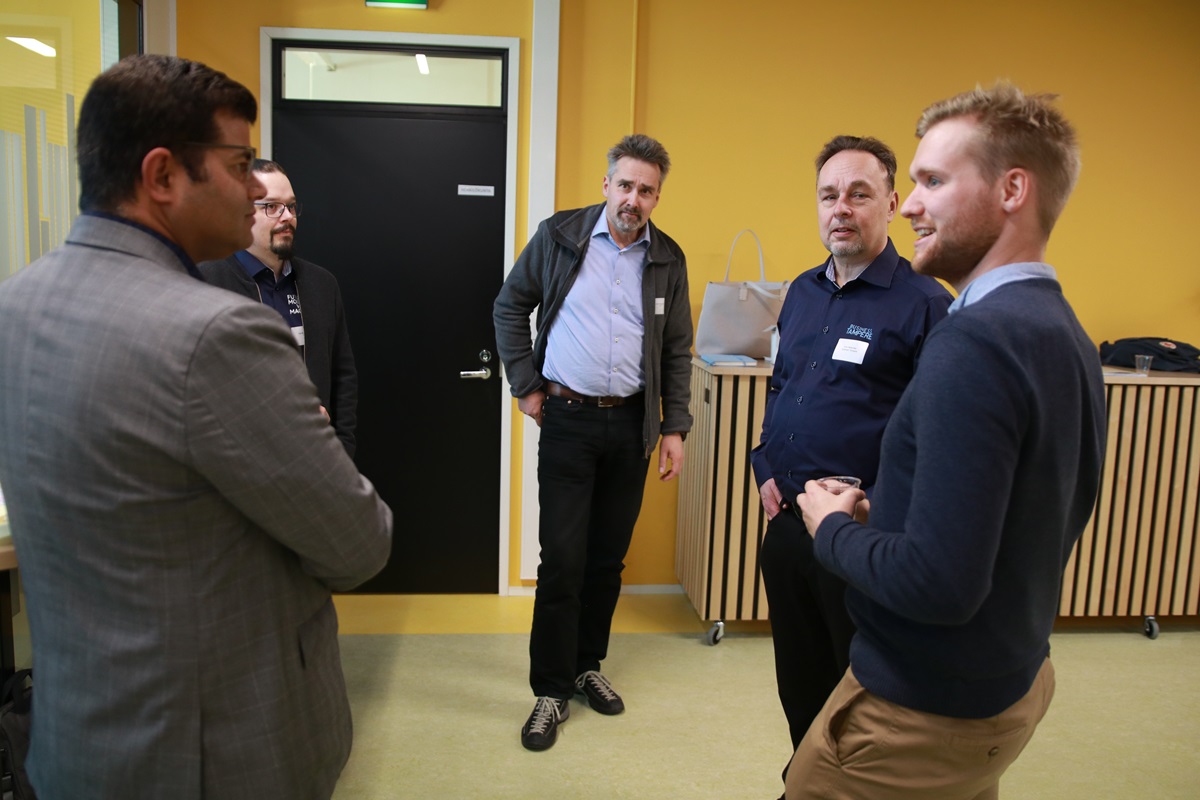
The photo is from the final seminar of the Twin transition of mobile work machines (SIX-PoE) lead project held in Tampere.