Turku Science Park is becoming a centre of sustainable growth and expertise
10.11.2026 •
Business cooperation
Ecosystem work
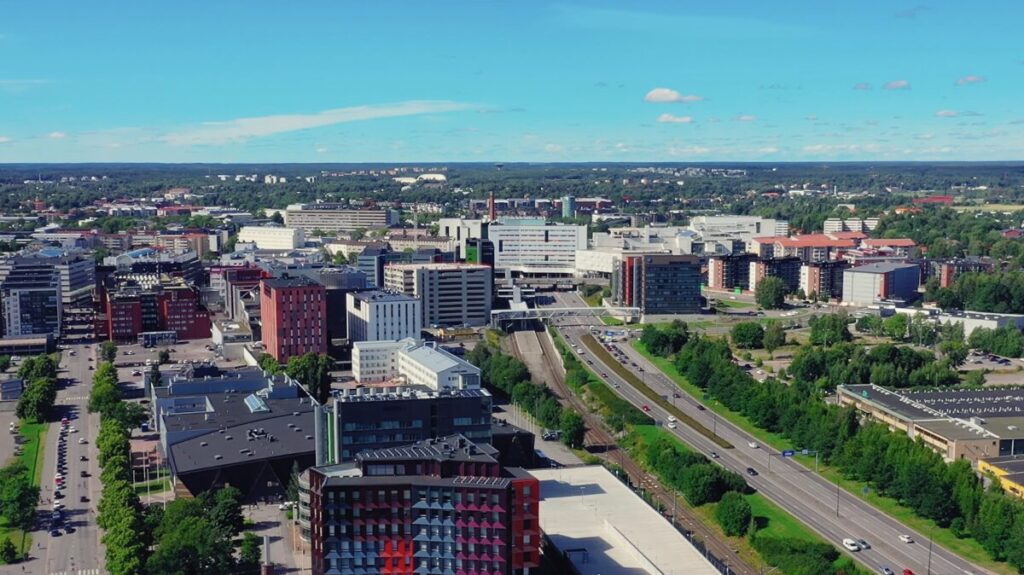
Turku Science Park combines several prerequisites for growth: a central location, high-quality housing and services, developing transport solutions, and high-level educational institutions and companies. This growth is driven by an ambitious vision that extends several decades into the future, as well as the shared desire of all stakeholders to develop the area sustainably and intelligently.
Turku Science Park is a significant driver of growth for the entire Turku region. In Turku, both research and innovation activities as well as high-skilled jobs are concentrated in the Turku Science Park area, right next to the city centre. The third-largest workplace cluster in Finland is in an excellent location.
“The Science Park is one of the most important development projects in the Turku urban area, with an enormous knowledge-based potential. The Science Park facilitates interaction between higher education institutions, businesses and city residents, thereby enabling growth and development in the entire region”, says Ari Mäkinen, CEO of Turun teknologia- ja tiedepuisto Oy.
The Science Park extends loosely from the University of Turku campus to the Kupittaa workplace cluster and from there to the growing Itäharju suburb. New construction is currently taking place particularly in the Kupittaa Core area. In line with the Science Park project’s vision, 18,000 new jobs and homes for 16,000 residents will be created in the area.
“Substantial construction, extensive infrastructure projects and other development of the area will create new jobs and attract skilled labour, the availability of which will improve from good to excellent.”
Turku aims to be one of the world’s leading cities in terms of climate and nature, and it is working toward achieving carbon neutrality by 2029. In its climate plan, the city has identified sustainable urban structure and construction as some of the most important factors in promoting carbon neutrality. This principle also guides the development of Turku Science Park.
“Resource-efficient and flexible solutions are sought during construction. Decentralised and carbon-neutral energy solutions, the area’s accessibility via public transportation, and high-density development are all part of what makes Turku Science Park resilient.”
The Science Park is being built through co-creation, which involves the city, businesses and higher education institutions, among others. Turun teknologia- ja tiedepuisto Oy is owned by the city, and its mission is to promote the city’s growth in a sustainable manner and in collaboration with the city and the Science Park’s core network. The company is responsible for the structural and functional development of the Turku Science Park area, which includes spearheading the Kupittaa Core alliance. The alliance consists of the City of Turku, YIT, Lundén Architecture, and Renell Käppi Architects, and it employs nearly 300 people from more than 70 companies.
The city has utilised the alliance model in a new way during local detailed planning, which has allowed the development and planning of the area to proceed according to the same timeline as the planning process. The alliance, the City of Turku and landowners have prepared a reference plan for local detailed planning. The reference plan is meant to guide high-quality construction in the Kupittaa Core area and the implementation of the overall plan.
“This is the first large-scale local detailed plan Finland to be developed through alliance-based collaboration. The goal has been to launch the project quickly and to complete it without interruptions”, Mäkinen says.
For the City of Turku, the total investment into the Kupittaa Core partnership project is approximately EUR 200 million. Further construction in the area will mostly be privately funded and market-driven.
The Kupittaa Core partnership project involves the construction of a public transport deck across Helsinginkatu and the railway, which will connect Kupittaa and the Itäharju suburb. The alliance project is also building the Taito campus, deck plazas, facilities below the deck and a parking parking facility with a capacity of approximately 660 spaces, a rooftop garden and fitness stairs. Helsinginkatu will be moved, and it will become a boulevard-like gateway to Turku.
Based on the local detailed plan for the Kupittaa Core, a high-quality and versatile urban environment will be built in the Science Park. The old industrial facilities and unused sites in Itäharju will be transformed into residential blocks of housing, services and workspaces.
“The Taito campus, which is being built in the centre of the expanding Science Park, serves as the area’s new landmark. The Taito campus reinforces the area’s role as a true centre of study, bringing together all service industry students from the Turku Vocational Institute, which means about 3,000 students”, Mäkinen says.
The parking facility, the public transport deck and the pedestrian and cycle traffic solutions will facilitate getting around and reduce the need for private cars. In the future, a tramway will run along the public transport deck. The urban structure is mainly based on closed blocks, with pedestrian-oriented areas planned in the middle of these blocks.
The plan also accounts for comfort and a wide range of services. A park and open spaces to support everyday interaction will be built in the area. The mixed urban structure combines housing reminiscent of a city centre with versatile services and commercial activities.
“The area combines many different functions and solutions: flexible and commercial facilities, housing, hotels and business premises are mixed into a living entity. The area will be open, safe and functional for people of all ages.”
A majority the approximately 50,000 students attending the five higher education institutions in Turku study in the Science Park area. The higher education institutions, organisations and businesses in the area promote new innovations in the circular economy. In other words, the Science Park strengthens the urban area’s circular economy in accordance with the city’s urban strategy.
“A circular economy roadmap establishing a framework for activities related to the circular economy has been created for the Science Park. The roadmap emphasises sustainable energy solutions, long-term and resource-efficient construction, mobility that enables a communal and sustainable lifestyle and other solutions that promote the diversity of urban nature”, Mäkinen says.
The Circular Science Park collaborative project has been launched to implement the roadmap. The project is co-financed by the EU and implemented by the City of Turku and the Turku University of Applied Sciences. The project will continue until autumn 2026, and the conditions for continuing it are being investigated.
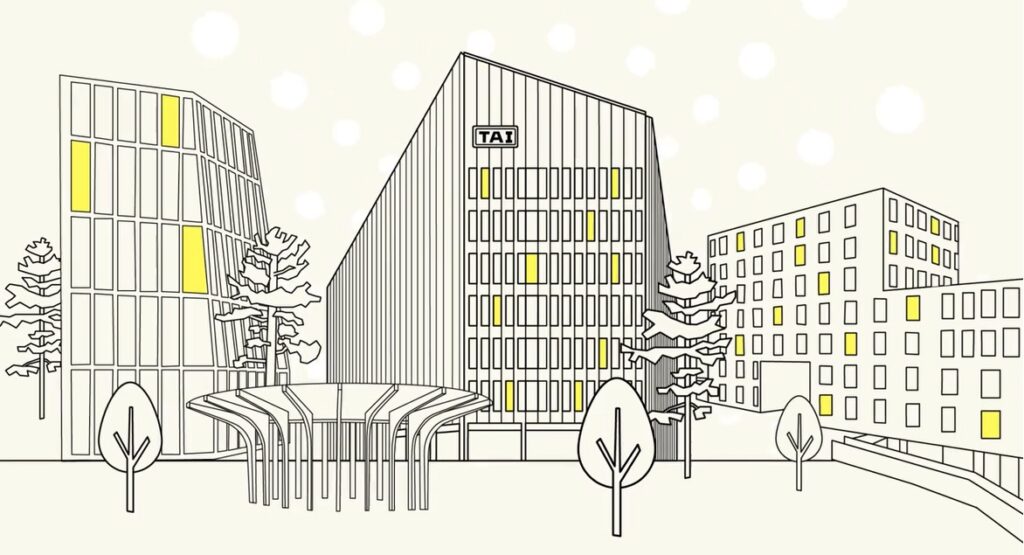
Photo: Image taken from a video: Turku Science Park is a significant driver of growth for the entire Turku region. Photographer: Mika Kurkilahti.
Urban development sites are important places for developing innovation ecosystems. They provide an opportunity to experiment with new solutions, develop business and build a sustainable city. Urban development sites are mentioned in every ecosystem agreement.
In this article series, we have previously presented these urban development project: